India Is Not One Market: Reflections from the ITB India Leadership Roundtable
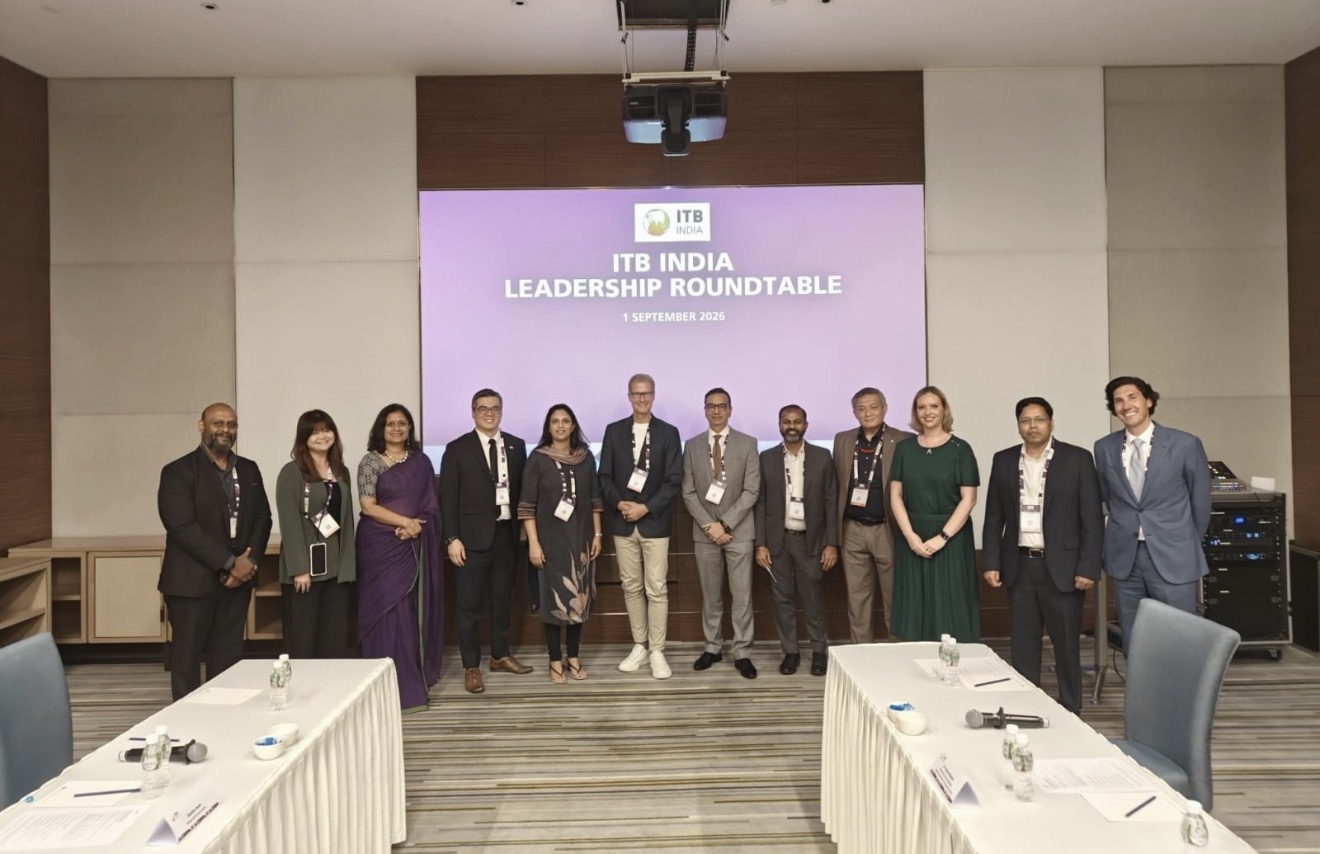
India is one of those countries where almost every tourism statistic becomes enormous very quickly. The population is enormous, the domestic tourism market is enormous and the potential for international travel is enormous. Yet perhaps the most interesting thing I took away from the ITB India Leadership Roundtable in Mumbai was that the numbers alone tell us surprisingly little about the opportunity.
I had the opportunity to participate in the roundtable during ITB India 2026, discussing India’s changing position in global tourism from both sides of the equation. India is becoming an increasingly important outbound market for destinations around the world, while at the same time the country itself continues to work on converting its extraordinary tourism assets into stronger international inbound demand.
These are two very different stories, but they are happening at the same time.
A tourism giant that still has enormous room to grow
The scale of domestic travel in India is difficult to compare with most countries. The discussion highlighted that the overwhelming majority of travel by Indians still takes place within India. This is understandable when you consider the diversity of what exists within the country’s own borders. A traveller can experience mountains, beaches, megacities, wildlife, deserts, religious sites, wellness, gastronomy and an extraordinary variety of cultures without ever leaving India.
At the same time, close to 33 million international journeys are already being made by Indian travellers. What makes this particularly interesting is that international travel still touches only a relatively small share of the population. During our discussion, it was noted that passport ownership remains relatively low and that only a small percentage of Indians have travelled internationally.
This is why the future potential attracts so much attention from destinations around the world. Even relatively modest changes in the proportion of Indians travelling abroad can translate into millions of additional international travellers.
But this is also where the numbers can become misleading.
There is a danger that destinations look at 1.4 billion people and see one enormous source market called “India”. The discussion in Mumbai made very clear why that approach does not work.
There is no single Indian traveller
India is a country of extraordinary internal diversity. Geography, language, religion, culture, income, age, family structure and previous travel experience all influence travel behaviour. The differences between traveller segments can be considerable.
There are experienced international travellers who have been travelling globally for years, alongside a rapidly emerging group taking their first or second international journey. There are luxury travellers, families, younger independent travellers, business travellers, students, honeymooners, wellness travellers and increasingly people combining work and leisure.
Even the question of where in India a traveller comes from can make a substantial difference.
For international destinations, this means India needs considerably more segmentation than simply identifying it as a priority source market. The interesting question is not whether Indian outbound travel will grow. It almost certainly will. The much more useful question is which Indian travellers are relevant for a particular destination and whether that destination understands them.
This brought us during the roundtable to the idea of being “India-ready”.
I found the term useful, but only if we are careful about what we mean by it. Being India-ready should not become another collection of stereotypes about what Indian visitors supposedly want. It should mean understanding the particular segments you are trying to reach and removing unnecessary friction from their journey.
Food is an obvious example. It matters, but the answer is not simply to assume that every Indian traveller wants the same food. Dietary preferences can be highly individual and culturally influenced. What matters is that destinations and hospitality businesses understand these differences and communicate clearly what is available.
The same applies to visa requirements, flight connections, payment methods, language, family travel, shopping and the types of experiences people are looking for. Readiness is ultimately about understanding the customer rather than creating an imaginary “Indian traveller”.
Connectivity may decide more than marketing
One thing that came through particularly strongly in the discussion was the importance of connectivity.
Destinations naturally want to tell inspiring stories, but an attractive story does not remove the practical realities of travel. Flight availability, travel time, connections and visa processes can have enormous influence on destination choice.
For an emerging international traveller in particular, simplicity can be extremely valuable. A destination that is easy to reach, easy to understand and easy to enter may have an advantage over one that is theoretically more attractive but considerably more complicated.
We also discussed how destinations such as Japan are attracting increasing attention from Indian travellers. It is an interesting reminder that outbound markets are not static. As connectivity improves, visa policies change and travellers become more experienced, the competitive landscape changes with them.
For European destinations, including those in the Nordic countries, this is worth thinking about carefully. It is easy to look at the growth forecasts for Indian outbound travel and assume that some of that growth will naturally reach us. It will not. We are competing with destinations across Asia, the Middle East and the rest of the world, many of which are geographically closer and increasingly sophisticated in how they approach Indian travellers.
The question is therefore not only whether India is ready to travel. It is whether we are ready to compete for those travellers.
India as a destination is a different story
The other side of the discussion was equally fascinating. If India’s outbound potential is attracting enormous international attention, the development of international inbound tourism presents a more complicated picture.
India has almost everything that should make an international tourism destination compelling. Its cultural heritage is extraordinary. Its culinary diversity alone could support countless tourism experiences. It has mountains, beaches, wildlife, cities, rural landscapes, wellness traditions, spirituality, festivals and an enormous variety of local cultures.
Yet having tourism assets and converting them into international tourism demand are not the same thing.
The roundtable discussion reflected concerns about recent inbound performance, including the effects of geopolitics, air connectivity and travel costs. International promotion was also part of the conversation. At the same time, India’s huge domestic market means that tourism businesses can often generate significant demand without relying on international visitors.
That creates an unusual dynamic. In many smaller tourism economies, attracting international visitors is essential because the domestic market simply cannot sustain the tourism infrastructure. India does not face the same equation. Domestic travellers can fill hotels, attractions and destinations at a scale that would be impossible in many other countries.
This gives India considerable strength, but it can also change the urgency around international tourism development.
Incredible India, but which India?
We also discussed destination storytelling and the legacy of Incredible India. It is difficult to think of many national tourism campaigns that achieved such strong international recognition. The idea was simple, memorable and capable of accommodating the enormous diversity of the country.
That diversity, however, is also one of India’s great marketing challenges.
Trying to communicate India as one destination inevitably means deciding which India you are presenting. The India of Rajasthan is very different from Kerala. The Himalayas offer something completely different from Mumbai. Wellness, spirituality, gastronomy, wildlife, heritage, beaches and contemporary urban India can all provide reasons to travel, but putting everything into the same message can easily make the proposition less rather than more understandable.
This is where I found the discussion around destination-level organisations particularly interesting. India’s international tourism opportunity may increasingly depend on individual regions and destinations becoming strong enough to tell their own stories within the larger India story.
For an international visitor who knows relatively little about the country, “India” may initially create the interest. A clearly defined destination, itinerary or experience is what eventually makes the trip possible.
There is an important difference between inspiration and conversion. A national brand can make me want to visit India, but at some point I still need to understand where I should go, how I get there, how long I should stay and what I can actually experience.
AI could change how people discover India
Artificial intelligence added another interesting dimension to this discussion.
For a country as complex as India, AI could actually make travel planning considerably easier. Instead of trying to understand hundreds of destinations and thousands of possible itineraries, a traveller can describe what they are interested in and ask AI to create a journey around those preferences.
Someone might want food and culture but not major cities. Another traveller might want wildlife combined with wellness. Someone else may have ten days, be travelling with children and want to avoid too many internal flights. AI can begin turning India’s enormous tourism inventory into something personalised and understandable.
The same applies in the opposite direction.
An Indian traveller considering an international holiday can increasingly ask AI to compare destinations based on very practical criteria: flight time from Mumbai or Delhi, visa requirements, vegetarian food, climate, budget, shopping, family activities or the likelihood of seeing snow.
This changes the competitive environment because travellers no longer necessarily need to know which destinations to investigate. They can describe the experience they want and allow AI to suggest the destinations.
For less familiar destinations, that could be a significant opportunity. An Indian traveller does not necessarily need to have heard of a destination before considering it. If the digital information about that destination is strong enough and the experience matches what the traveller is asking for, AI can potentially introduce the destination into the consideration process.
But that also means destinations need to understand what Indian travellers are actually asking.
The next Indian traveller may be different from the last one
Perhaps this is the part of the Indian outbound story I find most interesting.
When a market grows rapidly, the next wave of travellers is rarely identical to the previous one. The first people to travel internationally tend to be different from those who follow later. As international travel becomes accessible to a broader section of society, motivations, budgets, expectations and destination choices change.
We should therefore be careful about building our understanding of the future Indian traveller entirely from the Indian travellers we already receive today.
The next ten million international travellers from India may behave differently from the previous ten million.
They may discover destinations differently. They may use AI rather than Google to plan their journey. They may prioritise different experiences. They may travel independently rather than in groups. They may combine business and leisure differently. They may be attracted to destinations that have traditionally had very little presence in the Indian market.
That is what makes India such an interesting market to follow right now.
For destinations, the opportunity is undoubtedly significant, but capturing it will require much more than recognising that India is growing. We need to understand where that growth is coming from, how traveller behaviour is changing and which parts of the market genuinely match what our destinations can offer.
For India, the opportunity is equally fascinating. Few countries have such a diverse collection of tourism assets combined with such a powerful domestic market. Turning more of that potential towards international visitors will require making the country’s enormous variety easier to understand, discover and experience.
I came away from the ITB India Leadership Roundtable with fewer simple conclusions about India than I had when I entered the room, and I actually consider that a good result. Markets this large and diverse should not produce simple answers.
India is not one market, one traveller or even one tourism story. And perhaps understanding that is the best starting point for anyone who wants to be part of its next chapter in global tourism.
Comments